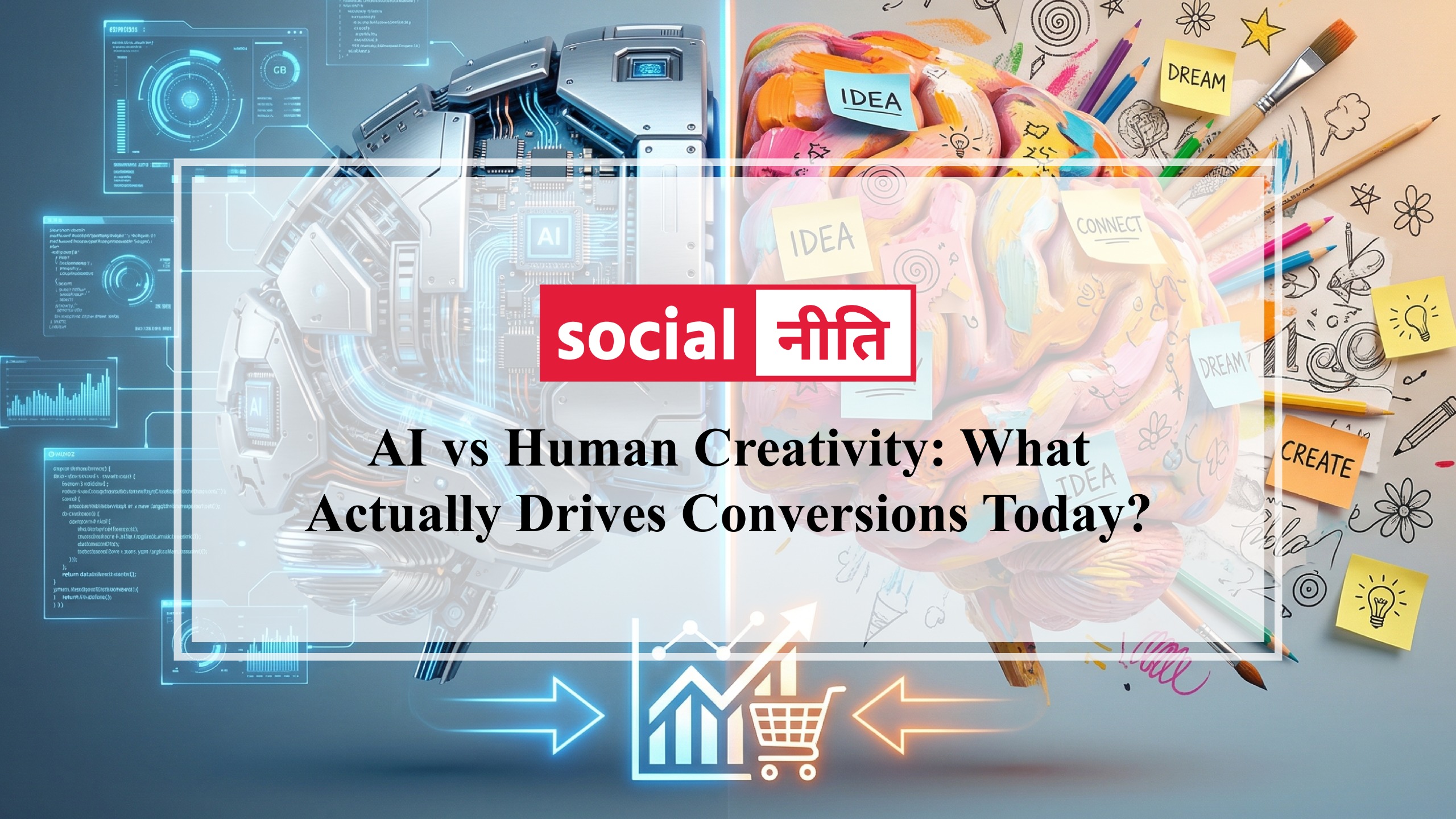
In digital marketing, one question keeps coming up: what actually drives conversions better, AI or human creativity? Some brands lean heavily on automation, data, and machine learning. Others believe creative thinking, storytelling, and emotional connection are what truly persuade people to take action. The truth is more practical than dramatic. Conversions do not come from choosing one side and ignoring the other. They come from knowing how to combine both in the right way.
AI has changed the speed and precision of marketing. It can process massive amounts of data, predict user behavior, personalize campaigns, and optimize performance in real time. Human creativity, meanwhile, brings originality, empathy, cultural understanding, and strategic judgment. It is what gives a brand a distinct voice and makes people care. In a crowded digital space, that emotional edge matters just as much as technical performance.
For brands trying to grow online, the real advantage lies in balancing both forces. That is where agencies with strong strategic and creative capabilities stand out. SocialNeeti understands that strong performance marketing alone is not enough, and creativity without direction is not enough either. The real wins happen when smart data meets strong storytelling, and when automation supports rather than replaces human thinking.
Let’s break down how AI and human creativity each contribute to better conversion performance, and why the strongest marketing approach today is a blend of both.
1. AI makes personalization scalable
One of AI’s biggest strengths is personalization. It can study browsing patterns, purchase history, ad interactions, device behavior, and user intent at a speed no human team can match. Based on this, it can show the right content, product, or ad to the right person at the right time. That kind of precision improves user experience and often increases the chances of conversion.
A customer who sees relevant recommendations is far more likely to stay engaged than someone who gets generic messaging. AI helps brands create journeys that feel tailored instead of broad and random. It can segment audiences, automate recommendations, and refine ad targeting continuously.
This matters because modern consumers expect relevance. They do not want to dig through irrelevant offers or repetitive messaging. They want quick, clear, personalized experiences. AI helps deliver that at scale.
But personalization is only effective when the message itself feels meaningful. Showing the right ad is important. Showing the right ad with the right emotional hook is even more important.
2. Human creativity creates emotional connection
This is where human creativity becomes irreplaceable. AI can identify behavior patterns, but it cannot truly understand emotion the way people do. It cannot live culture, feel tension, recognize irony with human depth, or create stories from lived experience. Great marketing is not only about serving content. It is about making people feel something.
People remember stories more than systems. They connect with honesty, humor, aspiration, struggle, and identity. Human creativity builds those emotional bridges. It turns a campaign into a message that people recognize themselves in. It gives a brand tone, style, and personality.
This is especially important for conversion because people rarely buy based on logic alone. Even when data informs the decision, emotion often drives it. Trust, relatability, confidence, aspiration, and comfort all influence action. A human-led creative strategy understands how to tap into those triggers with nuance.
That is one reason SocialNeeti focuses not just on performance metrics, but also on how a brand is being perceived, remembered, and emotionally understood by its audience.
3. AI improves speed, testing, and optimization
Marketing used to involve slower decisions. Teams would launch campaigns, wait for reports, review results, then make changes. AI has compressed that timeline dramatically. Today, campaigns can be adjusted almost instantly based on live performance data.
AI helps monitor click-through rates, conversions, bounce rates, audience responses, and keyword shifts in real time. It can test multiple versions of ads, landing pages, and subject lines quickly. It can highlight what is underperforming and what deserves more spend. That makes campaigns more efficient and budgets more accountable.
This level of speed is especially useful in paid media, e-commerce, retargeting, email automation, and audience segmentation. Brands no longer need to rely only on assumptions. They can respond to patterns as they emerge.
Still, AI can tell you what is happening. It cannot always tell you why it matters in a larger brand context. That interpretation still needs people.
4. Human originality helps brands stand out
In a world where AI can generate headlines, captions, descriptions, and even visuals, originality matters more than ever. The problem is not that AI-generated content is always bad. The problem is that it often sounds similar, feels safe, and lacks a distinct point of view. When every brand begins to sound polished but predictable, differentiation becomes a serious challenge.
Human creativity is what breaks that sameness. It brings unexpected ideas, strong brand voice, fresh angles, and content that feels alive. A good creative team understands timing, audience psychology, platform behavior, and cultural relevance. They know when to be subtle, when to be bold, and when to say less.
That kind of originality drives stronger brand recall, which directly affects conversion over time. Consumers are more likely to click, trust, and buy from brands they remember. That memory is built through creative distinctiveness, not just optimized delivery.
5. AI helps identify the right audience faster
Finding the right audience used to take longer and involve more waste. AI has made audience discovery smarter. It can identify high-intent users, build lookalike groups, predict likely buyers, and refine targeting based on behavioral signals that go beyond basic demographics.
This allows brands to spend more efficiently and focus on users who are more likely to convert. Rather than advertising to everyone, AI helps narrow the field to the people who matter most. That improves ROI and reduces noise.
But even the best targeting can fail if the creative message is weak. Reaching the right audience is step one. Speaking to them in the right way is step two. The first is often powered by AI. The second depends heavily on human skill.
6. Human-led design adds meaning to visual experience
AI can suggest layouts, detect patterns, and even generate design options based on trends. But good design is not just about arranging elements neatly. It is about meaning, mood, emphasis, and instinct. It is about knowing what visual choice will make someone pause, trust, or click.
A strong designer understands how brand identity translates into visual language. They know how typography, spacing, imagery, hierarchy, and color work together to guide attention and influence emotion. They also understand the context behind the design. What audience is this for? What platform is it on? What action should it drive?
That visual intuition still belongs to people. AI can assist, but it cannot replace creative judgment. The strongest design work happens when technology supports execution while human creators lead the vision.
7. The best copy usually starts with strategy, not automation
AI is useful in copywriting for speed and variation. It can help generate multiple options, headlines, descriptions, and rough drafts. That can save time. It can also support SEO, structure, and consistency. But persuasive copy is not only about assembling words in the right order. It is about understanding motivation.
Great copy speaks to fears, desires, frustrations, and aspirations. It knows what not to say as much as what to say. It reflects the brand voice, the user mindset, and the context of the moment. That kind of persuasive depth still needs human direction.
This is where strategy matters. A human copywriter or strategist understands the difference between writing content and writing something that moves someone to act. AI can support the process. It should not define the final message on its own.
8. Social media needs both efficiency and personality
Social media is one of the clearest examples of where AI and human creativity need each other. AI is extremely useful for scheduling posts, tracking engagement, spotting trends, recommending post times, and automating basic responses. These functions improve efficiency and consistency.
But social media is also where brands show personality. It is where tone matters, humor matters, timing matters, and cultural awareness matters. The posts that get noticed are usually the ones that feel sharp, human, relevant, and well judged. The replies that build loyalty are the ones that sound sincere, not scripted.
That balance is critical. Brands that rely too much on automation often become forgettable. Brands that rely only on creativity without structure often become inconsistent. SocialNeeti helps bridge that gap by combining content thinking, platform understanding, and data-backed execution so social media can do more than just stay active. It can actually drive engagement and conversions.
9. Customer feedback needs analysis and interpretation
AI is excellent at processing customer feedback at scale. It can analyze reviews, comments, form responses, and conversations to identify patterns and sentiment. That makes it easier for brands to understand what customers are saying in aggregate.
But customers do not always say exactly what they mean. Tone, frustration, sarcasm, confusion, and emotional undertones can easily be misunderstood when reduced to simple sentiment labels. Human interpretation adds the missing layer. It helps brands understand context, urgency, and opportunity.
This matters for conversion because customer insights shape better messaging, stronger offers, sharper user journeys, and more relevant communication. AI can surface the signals. Humans decide how to act on them in a way that aligns with the brand.
10. Conversions grow fastest when AI and creativity work together
The real debate is not AI versus human creativity. The real question is how well a brand can combine them. AI makes marketing faster, smarter, and more measurable. Human creativity makes it more memorable, persuasive, and meaningful. One without the other creates imbalance.
If a campaign is purely data-led, it may become efficient but forgettable. If it is purely creative without analytical discipline, it may be exciting but underperform. The most successful campaigns usually come from collaboration. AI informs the decision. Humans shape the experience.
That means using AI to identify patterns, refine audiences, automate workflows, optimize spend, and test performance. It also means relying on human teams to define brand voice, develop campaign ideas, interpret results, and build emotional connection.
This approach is especially important in India’s fast-moving digital environment, where audiences are diverse, attention is fragmented, and expectations are rising. Brands need both sharp execution and cultural relevance. They need performance and personality. They need systems and storytelling.
That is exactly where SocialNeeti adds value. Instead of treating AI as a shortcut or creativity as decoration, SocialNeeti uses both as part of a larger strategic framework. The goal is not just more traffic or more impressions. The goal is stronger conversion pathways, better brand connection, and more sustainable digital growth.
Conclusion
AI is powerful. Human creativity is powerful. But conversions are driven best when both are working together with clarity and purpose. AI brings speed, precision, personalization, and optimization. Human creativity brings originality, empathy, trust, and emotional resonance. Brands that understand this balance are the ones most likely to win attention and convert it into action.
What this really means is simple: the future of digital marketing does not belong to AI alone, and it does not belong to creativity alone. It belongs to brands that know how to combine intelligent systems with meaningful human insight. That is where performance becomes stronger and brand value becomes deeper.For businesses looking to grow online, this is not just a theory. It is a practical strategy. SocialNeeti helps brands bring that strategy to life by blending data-driven marketing with creative thinking that actually connects. From campaign planning to content, from audience targeting to conversion optimization, SocialNeeti helps businesses use AI in a smarter way while keeping the human side of the brand strong, visible, and persuasive. And in the end, that balance is what drives better marketing and better conversions
Frequently Asked Questions
There isn’t a clear winner between AI and human creativity when it comes to conversions. AI helps with data analysis, targeting, and optimization, while human creativity builds emotional connection and brand trust. The most effective approach is combining both. Agencies like SocialNeeti focus on blending data-driven insights with creative storytelling to create campaigns that not only perform well but also connect with the audience.
Businesses can use AI for tasks like audience segmentation, performance tracking, and automation, while relying on human teams for strategy, messaging, and creative direction. This balance ensures efficiency without losing brand personality. SocialNeeti follows this approach by using AI to guide decisions and human creativity to craft impactful campaigns that drive real engagement and conversions.
Even with advanced AI tools, human creativity remains essential because it brings originality, emotion, and cultural understanding into marketing. AI can optimize, but it cannot truly replace storytelling or brand voice. This is why SocialNeeti emphasizes creative thinking alongside AI-driven execution, ensuring that campaigns feel authentic while still delivering strong, measurable results.